

As one of the most commonly-diagnosed cancers among women, breast cancer has become a major topic in the world of preventative care. With technologies and protocols advancing rapidly in the last decade, the options for highly-effective preventative care have expanded, making prevention and detection more accessible.
Why Understanding Breast Cancer Matters
One of the best tools in the fight against breast cancer is knowledge. Here at MagView, we are dedicated to not only improving breast cancer screening and reporting protocols in breast health centers across the country, but also to spreading awareness and understanding to as many women as possible.
According to Breastcancer.org, about 1 in 8 women (12%) will develop breast cancer over the course of their lifetime. All women are at risk of contracting breast cancer, but certain demographics are at a higher risk, specifically women with a family history of breast cancer, and those with the BRCA1 and BRCA2 genes. However, 85% of women who develop breast cancer have no family history. Having a fuller understanding of what breast cancer is and what its symptoms are can aid in early detection, which has been proven to significantly improve breast cancer outcomes in patients.
Key Facts About Breast Cancer
While there are many facts about breast cancer to keep in mind, there are a few topics that we believe every woman should be aware of. Knowing these key facts can help you personally keep an eye out for symptoms, and can also help you have more effective conversations with your provider.
Types & Subtypes of Breast Cancer
- Non-invasive: breast cancer that stays within the milk ducts or lobules in the breast and does not spread or grow beyond that.
- Ductal Carcinoma in Situ (DCIS): cancer that starts and stays within the milk ducts.
- Lobular Carcinoma in Situ (LCIS): This is not technically cancer, but grows within the lobule, and indicates a greater risk for invasive cancer. A warning sign, if you will.
- Invasive: Cancer that has spread to outer tissue from ducts and lobules and has the ability to spread further to breast tissue and other parts of the body. This is the most common type of cancer.
- Invasive Ductal Carcinoma (IDC): This is the most common type of breast cancer, making up about 80% of all cases. It starts in the milk ducts, lobules and/or breast tissue and may either remain localized or spread to other areas of the body.
- Invasive Lobular Carcinoma (ILC): This accounts for around 10% of breast cancers; it begins in the lobules or milk glands and then spreads.
- Inflammatory Breast Cancer (IBC): This accounts for about 1% of all breast cancers. It is a very rare but aggressive form of breast cancer that grows and spreads quickly, becoming worse in just a matter of days.
- Male Breast Cancer: Extremely rare, this breast cancer accounts for less than 1% of all breast cancers. Breast cancer can happen in men who have breast tissue due to high levels of estrogen in their body, either naturally or from hormonal medicines/injections.
- Metastatic Breast Cancer: Also known as stage IV cancer, this type of cancer is when the cancer cells have broken away from the breast and spread to other regions of the body.
- Paget’s Disease of the Nipple: This is an extremely rare form of cancer that grows in or around the nipple, starting in the ducts close to the nipple and spreading outward. This causes redness, itchiness, and irritation to the outer nipple and some discoloration. It accounts for less than 5% of all breast cancer.
- Phyllodes Tumors of the Breast: These are tumors that are typically benign (noncancerous) but can also be malignant (cancerous) or somewhere in between. They grow quickly and require surgery for removal.
- Triple Negative Breast Cancer: A fast-growing cancer in which cells are missing the three main proteins found in common types of breast cancer. Triple negative breast cancer requires aggressive treatment.
- HER2-positive Breast Cancer: A type of breast cancer that tests positive for the human epidermal growth factor receptor 2, which is a protein called HER2. This cancer is found to be highly treatable with specialized treatments.
Risk Factors
There are a variety of risk factors that can contribute to a woman’s likelihood of getting breast cancer. Some of them can be altered through lifestyle changes and treatments (modifiable), and others cannot be changed (non-modifiable).
- Non-modifiable Risk Factors: Age, genetics, family history, breast density
- Modifiable Risk Factors: Alcohol consumption, obesity, hormone therapy, physical activity
Other factors fall somewhere in between these categories, like reproductive history.
Prevention & Risk Reduction Strategies
Though there is no surefire way to prevent breast cancer, there are strategies a woman can employ in order to reduce her risk, and improve her chances of prevention.
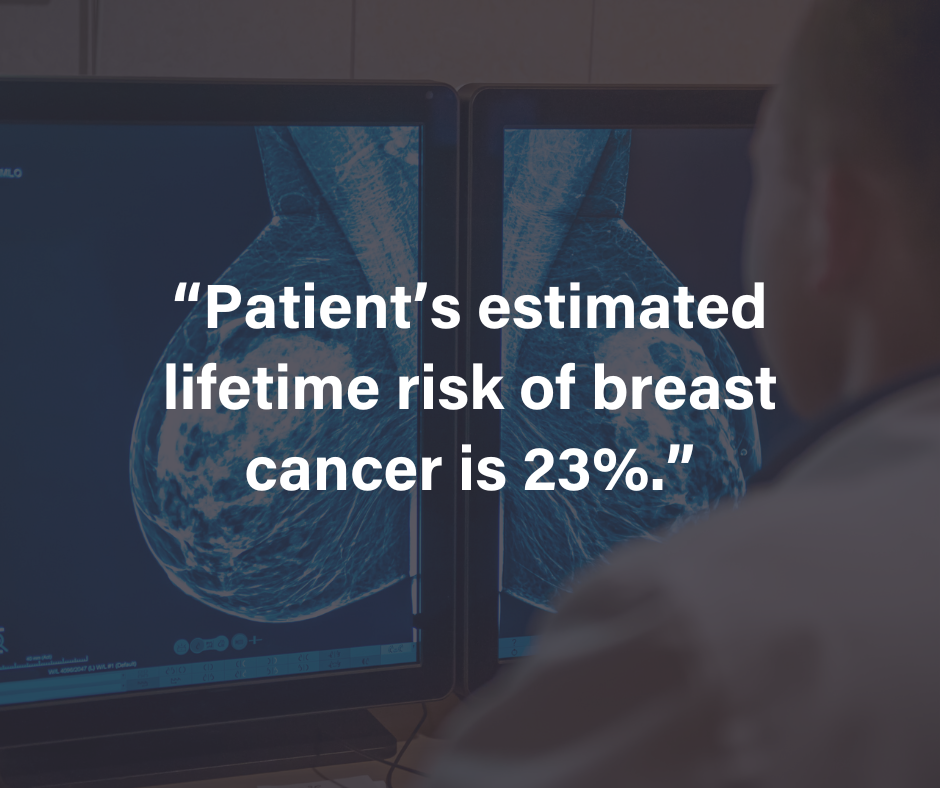
Understand Your Personal Risk Profile: Talk to your provider about risk assessment and screening if it hasn’t come up already. Some useful tools are our breast cancer risk calculator and AI tools like Clairity Breast that can assess your 5-year risk directly from your mammogram.
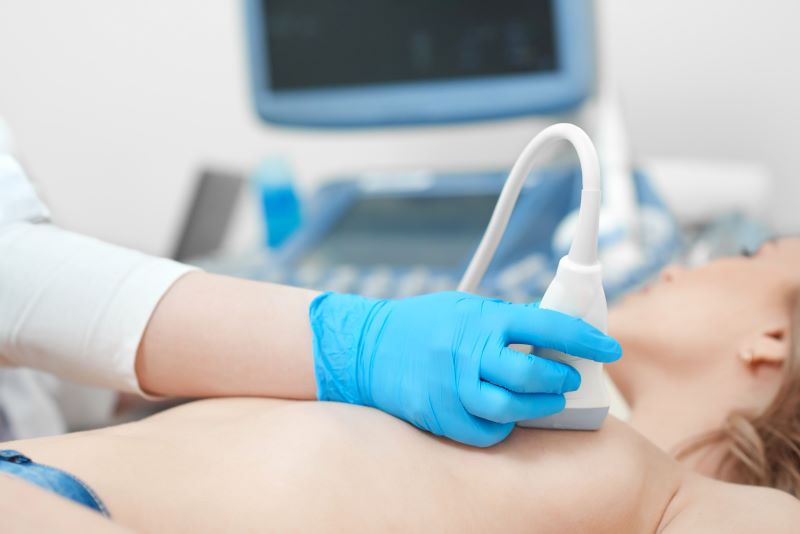
Regular Screenings: Options like mammograms, ultrasounds, and MRI are the most common, depending on your risk score.
Genetic Testing: Your provider can recommend genetic testing based on your screening and risk assessment results. This gives certain high-risk demographics a chance to discover issues as early as possible.
Performing Self-Breast Exams: One of the most accessible forms of breast cancer risk reduction is by performing consistent self-breast exams at home. Learn how here.
Warning Signs & Symptoms
There is a wide range of warning signs and symptoms of breast cancer, and familiarizing yourself with them can go a long way toward early detection. MagView is excited to partner with the Know Your Lemons Foundation—a global leader in innovative breast health education. The Know Your Lemons Foundation has developed educational programming and technology designed to make breast health education simple and approachable.

Some common symptoms include:
- An area of thickened tissue around the breast
- A lump in the breast or armpit
- Unusual pain or tenderness in the breast and/or armpits
- Redness and/or irritation of breast skin and nipples
- Unusual discharge from the nipple
- A rash on the breast
- A sudden change in the size or shape of the breast
- Skin dryness and flaking in the breast area
- Change in nipple shape or inverted nipple
- Skin dimpling
If you notice any of these symptoms, it’s important to talk to your provider right away, so that appropriate screening can be done as quickly as possible.
Diagnostic Workup & Imaging
If you notice any of the signs or symptoms above, your provider will likely recommend a diagnostic workup. This usually happens at an imaging center, radiology group, or hospital. This can include:
- Clinical Breast Exam: A physical examination of the breasts and related tissues by a qualified provider
- Imaging Modalities: Mammography, Ultrasound, MRI, Contrast-Enhanced Mammography
- Biopsy: In which tissue is removed for analysis, and can include core needle and excisional biopsies. This is how specialists determine whether tissue is benign or cancerous.
- Staging Investigations: Testing of biopsied tissue that determines the stage or advancement of cancer, and can include PET/CT scans and bone scans
Stages & Classification
In order for providers to have a universal standard of classification for cancer stages, certain systems are used by all cancer centers and specialists.
The TNM system looks at three main indicators of cancer stage:
- Tumor: How large a tumor is and whether or not it has invaded other organs,
- Node: Whether or not lymph nodes in an area have become cancerous
- Metastasis: Whether or not cancer has spread to other organs in different parts of the body
One of the most common ways to classify cancer severity is through “stages,” which include:
Stage 0
Cancers that are non-invasive, such as DCIS as mentioned above. Stage 0 is when there is no indication of cancer cells spreading to other parts of the breast.
Stage I
Cancer that is invasive, and divides into two categories, Stage IA and IB:
- Stage IA: Invasive cancer tumor that measures up to 2cm and has not spread outside the breast
- Stage IB: Either an invasive small group of cancer cells or tumor between 0.2 mm and 2 mm that have been found in the lymph nodes
Stage II
Invasive breast cancer divided into two categories:
- Stage IIA: Can be one of the following:
- Cancer cells larger than 2 mm are found in 1-3 axillary lymph nodes close to the breast
- A tumor 2 cm or smaller has spread to axillary lymph nodes
- A tumor that is between 2 and 5 cm exists but has not spread to lymph nodes
- Stage IIB: Can be one of the following:
- Either a small group of cancer cells between 0.2 mm and 2 mm or a tumor between 2 and 5 cm that is found in the lymph nodes
- A tumor is between 2 and 5 cm and has spread to 1-3 axillary lymph nodes
- The tumor is larger than 5 cm but has not spread to axillary lymph nodes
Stage III
Invasive breast cancer divided into three categories:
- Stage IIIA: Can be one of the following:
- There is either a tumor of any size or no tumor, and the cancer is found in 4-9 axillary lymph nodes near the breast
- Can be either a tumor larger than 5 cm or a group of cancer cells between 0.2 mm and 2 mm that are found in the lymph nodes
- A tumor that is larger than 5 cm and has spread to 1-3 axillary lymph nodes
- Stage IIIB: can be one of a combination of the following:
- A tumor of any size that has spread to the larger chest area and/or skin of the breast, causing swelling or an ulcer
- Has spread to up to 9 axillary lymph nodes
- Has spread to lymph nodes near the breast
- Stage IIIC: invasive cancer where one or more of the following have occurred:
- There is either a tumor or no sign of cancer in the breast that has spread to the chest and/or breast skin
- Has spread to 10 or more axillary lymph nodes or has spread to lymph nodes above and/or below the collarbone
- Has spread to axillary lymph nodes or lymph nodes near the breast bone
Stage IV
Cancer where the cells have spread outside of the breast/chest area into other organs and parts of the body, such as lungs, skin, bones, or other parts of the body. This is typically the “metastatic” or “advanced” cancer.
Treatment Options & Approaches
Depending on the stage of cancer, and any other medical consideration a patient has, providers will work together to recommend the proper treatment. These treatments can include:
- Surgery: Lumpectomy, mastectomy, reconstruction
- Radiation therapy
- Systemic therapies
- Chemotherapy
- Hormonal / endocrine therapy
- Targeted therapy / biologics
- Immunotherapy
The Importance of Understanding and Preventative Care
When it comes to fighting breast cancer, prevention and screening are some of the most important tools we have. The more information a patient has about the different types of breast cancer, symptoms, and screening options available, the more prepared she is to have the important conversations she needs to have with her provider.
If you are due for a breast cancer screening, or are concerned about any of the above symptoms or risk factors, we encourage you to call your provider and schedule a screening as soon as possible. Early detection is the key to positive breast cancer outcomes, and a conversation with your provider is the best place to start.
























![shutterstock_1299510538-[Converted]](https://azuretest.magview.com/wp-content/uploads/2023/05/shutterstock_1299510538-Converted.jpg "monitoring breast density")